
What is Leader-First Transformation™?
Leader-First Transformation™ is a proprietary approach to leadership development and organizational transformation that recognizes a fundamental truth: leaders create the conditions for change. When leaders don't have the capacity to model the behaviors that transformation demands, change won't take root in the organization. That's one of the biggest reasons why most transformation initiatives fail.
Organizations that adopt Leader-First Transformation™ experience a fundamental shift in how leaders and employees think and act, which makes lasting change possible.
These are the six core capacities at the heart of Leader-First Transformation™:
Expand your understanding of how your thoughts, emotions, and behaviors impact others. Self-aware leaders lead with presence instead of self-protection, creating trust and authenticity within their teams. This capacity allows you to respond thoughtfully rather than react impulsively.
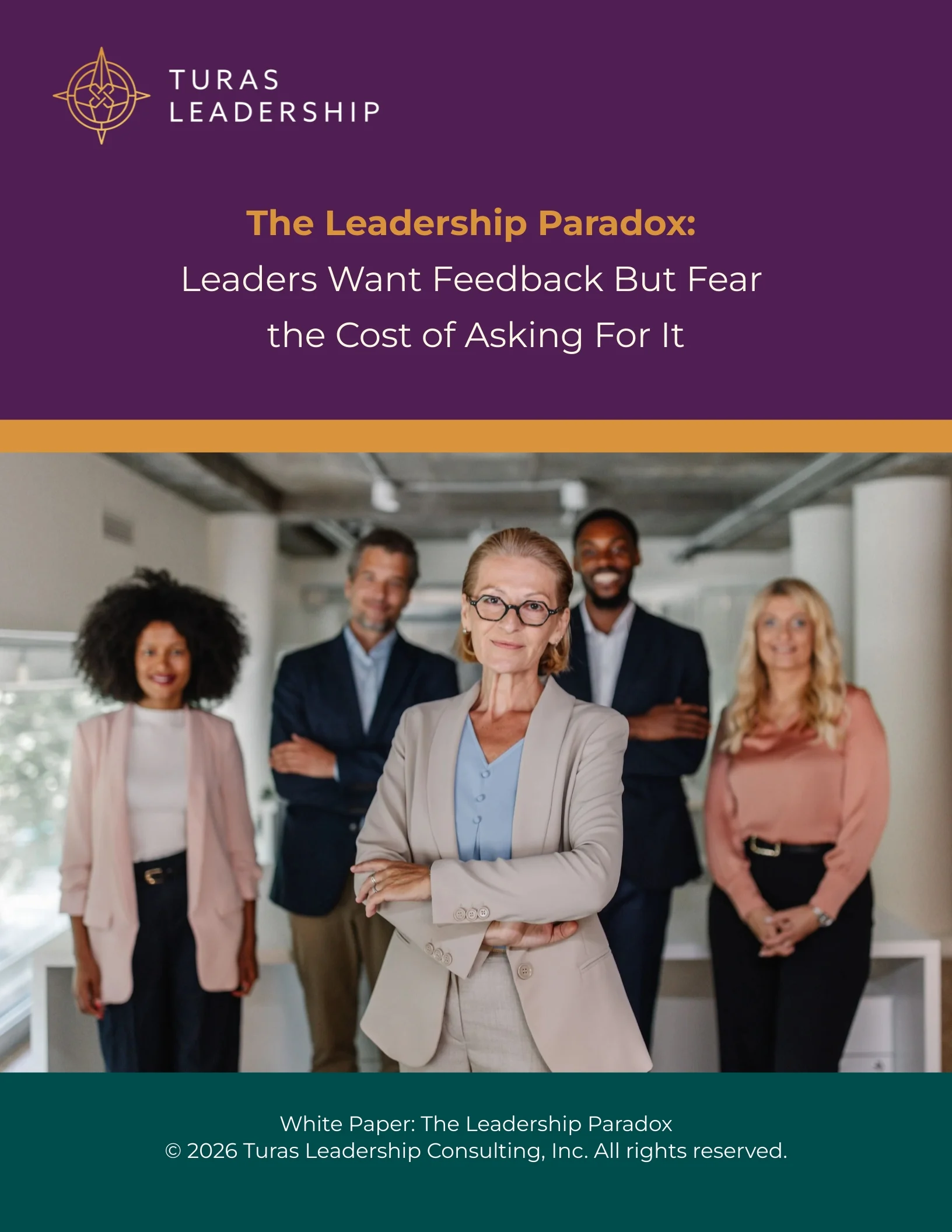
Download Our White Paper: The Leadership Paradox
As leaders face historic levels of complexity and burnout new data suggests psychological safety may be breaking down at the top. Our white paper explores what this means for transformation initiatives, what building systemic psychological safety requires and how capacity-building is critical for leadership development. We outline several key recommendations for what leaders and organizations must do differently to build healthy, resilient cultures for the future.
As Seen In:









Strengths-Based Organizational Consulting
At a time when leaders and organizations are under immense pressure - from AI transformation, evolving workforce expectations, and rising geopolitical complexity - Turas Leadership's strengths-based approach offers a powerful, research-backed methodology for leadership development, team building and executive coaching.
In a study on more than one million individuals across more than 50,000 business units, Gallup found that organizations that invested in strengths-based development experienced a 29% increase in profit, 72% lower attrition and a 15% increase in employee engagement.
Additional Benefits of a Strengths-Based Approach

Protects a Precious Asset
In many organizations, capital and technology can be duplicated - but people and culture can't. A strengths-based approach magnifies your human potential.
Fixing Weakness is Insufficient
Many leadership programs still focus on weaknesses, generic competencies, or one-size-fits-all models. Research proves that leveraging strengths yields better outcomes with less investment.

Aligns With Employee Needs
Today's top talent seeks meaningful work, psychological safety, authentic leadership and development opportunities. When leaders focus on strengths, employees feel valued, engaged and aligned.

Offers Measurable ROI
As shown in the Gallup research, the ROI is compelling: productivity, profit, engagement and retention all rise. That turns leadership development from a "nice to have" into a strategic investment.

Builds Resilience
Leaders who operate from their strengths are more authentic, energized and resilient. And that matters especially when the organization is navigating disruption, complexity or growth.

Create Strong Employer Brand
Organizations known for strengths-based leadership attract and retain better talent, create stronger leadership pipelines and build cultures of high performance and sustained well-being.
Our Philosophy
At the core of Leader-First Transformation™, is the belief that leaders should embark on an inward journey as the foundation for developing their power to transform people and organizations for the better. Guided by evidence-based research and the wisdom of lived experience, we help leaders achieve wholeness, nurture connection and develop presence so they can help everyone around them achieve their full potential. Through this work, Turas honors its mission to transform organizational cultures into environments where everyone can flourish.

Wholeness
We believe that to be a transformative leader, one must experience a transformation within the self first. That's why we help leaders achieve wholeness and alignment. Because when intellect, emotion, intuition, and purpose are integrated, clarity, authenticity and confidence follow.

Connection
Relationships are the medium through which transformation occurs - and lasting change requires building psychological safety as a system that benefits everyone. We help leaders and teams to reflect honestly, build connection and grow together, authentically. Trust is our foundation.

Presence
As the world becomes increasingly complex and leaders must navigate constant uncertainty - presence is power. Transformative leadership demands courage, honesty, and moral clarity. We guide leaders to slow down, listen deeply, and lead from a place of grounded awareness.
Emily Scherberth, Founder & CEO
Emily serves as a realignment partner and strategist for executives, teams and organizations that are ready to transform their cultures and lead with purpose.
With nearly 30 years of experience in corporate strategy, communications, leadership, qualitative research and facilitation, Emily created Turas Leadership to realign more intentionally with her own purpose: to help actualize the potential in others.
As the creator of the Leader-First Transformation™ model and a Gallup-Certified CliftonStrengths® coach, Emily synthesizes decades of direct leadership experience with forward-thinking research and evidence-based methods to help clients increase performance and find meaning in their work.
She holds a Bachelor of Arts degree in Communication Studies from Loyola Marymount University, a Master of Arts degree in Communication Studies from California State University, Northridge and a Master of Arts degree in Organizational Leadership from Gonzaga University.
Summary of Qualifications
A 2022 meta-analysis of strengths-based interventions in organizations concluded that when employees actively use their strengths, it improves well-being, job satisfaction, and performance outcomes.
Journal of Applied Psychology